Why I’m building a thrift community there (while keeping Facebook for the moment)
After managing op shops for 10+ years and running Facebook groups with over 150,000 Kiwi and Aussie op shoppers, I thought I’d seen every platform going. Then I discovered Skool, and honestly? It’s exactly what I’ve been missing…so I decided to write a quick Skool review to let you know my thoughts.
I’m not ditching Facebook, those groups are still going strong. But I’m building something different on Skool, and here’s why.
What Even Is Skool?
Skool is a community platform that’s basically Facebook Groups meets online courses, but without all the ads, trolls, algorithm chaos, and random political rants from your uncle.
It’s designed for people who actually want to build real communities, not just scroll mindlessly through cat videos (though no judgment if that’s your thing).
Why I’m Adding Skool to My Community Strategy
Look, Facebook’s great for what it is. Big reach, everyone’s already on it, easy to find people. But after years of running massive groups, I’ve hit some walls that Skool solves beautifully.
The Facebook Frustrations I’m Working Around:
1. Algorithm’s Cooked Your posts reach maybe 2-5% of your members unless you pay to boost. I’ll share important stuff and most people never see it. Members message me weeks later saying “I never saw that!”
2. Everything Disappears Try finding that post from two weeks ago where someone shared the perfect tip for removing price tag residue. Good luck mate. It’s gone into the void with your dignity and spare time.
3. Zero Structure Can’t organize guides properly, resources, or anything useful. Everything’s just a chronological feed that vanishes.
4. Constant Noise Ads, suggested posts, notifications about things you don’t care about. Facebook’s designed to keep you scrolling, not actually connecting.
5. Moderation Energy Dealing with spam and drama daily gets tiring. I wanted a space where the vibe is genuinely supportive and connected.
What Makes Skool Different
1. Clean as a Whistle

First thing you notice? No ads. No clutter. No algorithm deciding what you can and can’t see. Just your community having actual conversations.
For op shoppers specifically:
- Your “best finds” posts don’t get buried
- That guide you wrote on spotting quality vintage? People can actually find it again
- Conversations flow naturally without constant interruptions
2. Actually Organized
Skool’s got six main sections and they all make sense:
Community – Where daily chats happen. Share your op shop or thrift hauls, ask questions, celebrate finds.
Classroom – Where I organize all my guides (like “Spotting Gold and Silver”). They stay there. Forever. Not disappearing into the Facebook abyss.
Calendar – Schedule Zoom hangouts, thrift store hauls, Q&As. Everyone sees it in their timezone automatically. No more “wait, is that 3pm my time or yours?”
Leaderboard – Gamification stuff that actually works (more on this in a sec).
Members – See everyone in your community at a glance.
About – Your “shopfront” where people decide if they want to join.
3. Built for Learning AND Community
This is huge. On Facebook, if I share a guide, it takes forever to load. On Skool, I can create permanent resources:
A safe place to hold community generated tips and tricks
4. Gamification That’s Not Naff
Skool’s gamification is simple:
- Members earn points by posting, commenting, being helpful
- Points unlock levels (like “New Member” → “Regular” → “Thrift Legend”)
- You can lock special content at certain levels
In my free Thrift Insider community, I’ve locked some advanced guides at level 3. People engage to unlock them, but it doesn’t feel forced or cringe. They’re genuinely connecting with other op shoppers.
5. Native Video Hosting
New feature: upload videos directly to Skool. No mucking around with YouTube embeds or Vimeo links. Just upload your op shop haul videos straight in.
Clean, professional, no ads. Sweet as.
6. Mobile App That Actually Works
The Skool app is clean and doesn’t drain your battery like Facebook does. Members can post finds from the op shop in real-time, engage on the go, and it just… works.
How I’m Using Skool for The Thrift Insider
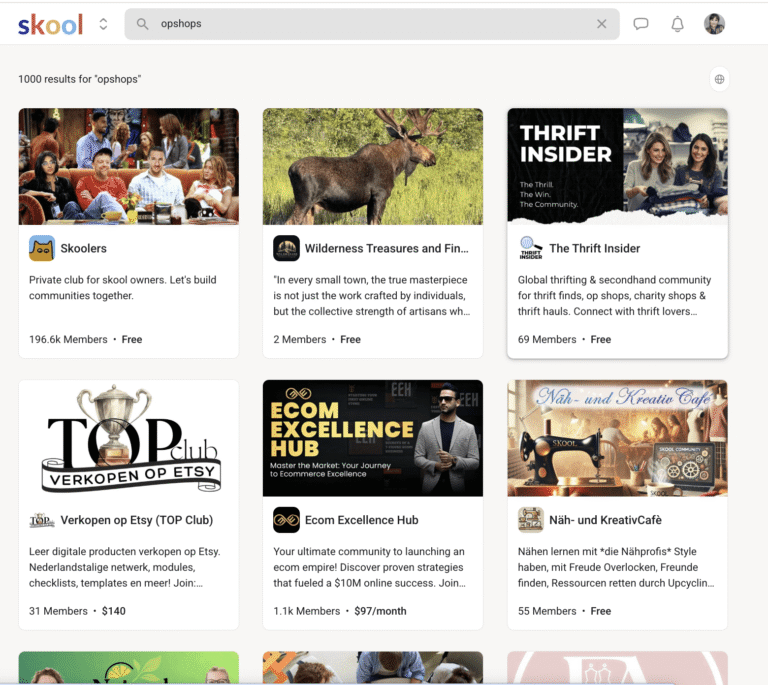
I’ve created The Thrift Insider as a global community for people who love op shops, thrift stores, charity shops, and secondhand shopping.
What we’re building:
- A place to share op shop hauls and celebrate finds
- Swap tips on spotting quality, cleaning vintage, pricing
- Connect thrifters from Auckland to Sydney to London – globally
- Organized resources like free guides on survival kit essentials and identifying gold/silver
- The ability to hold Zoom hangouts for Q&As and virtual thrift trips
The difference from Facebook?
Engagement is ten times better. People actually have proper conversations instead of just scrolling past. Members tell me they’ve found “their people” in a way Facebook never delivered.
I’m keeping my Facebook groups – they’re brilliant for reach and connecting with new people. But Skool is where I’m building the deeper community experience.
Skool Pricing (2025)
Joining free communities on Skool is completely free. You don’t pay anything to be a member – no sign-up fees, no monthly charges. You can join as many free groups as you want at zero cost.
If you want to CREATE your own community, Skool’s got two pricing options:
Hobby Plan: $9/month Perfect for testing it out or smaller communities. All the core features.
Pro Plan: $99/month For serious creators scaling bigger communities.
Both come with a 14-day free trial.
Is It Worth the Money?
Right, let’s be real: $99/month sounds like heaps for a platform.
But here’s the thing:
- Facebook’s “free” but you’re paying with your time and energy dealing with algorithm nonsense
- If you’re monetizing your community (courses, coaching, paid memberships), Skool pays for itself
- The Hobby plan at $9/month is basically two flat whites. Hardly breaking the bank.
I started with the free trial then moved to Hobby, and I’m only two weeks in. Zero regrets…and I’ll update you over time.
Skool vs Facebook Groups
| Feature | Skool | |
| Cost | Free | $9-$99 (2 week free trial) |
| Algorithm | Reach 2-5% only | Everyone sees posts |
| Distractions | Ads, noise, chaos | Clean focussed |
| Organisation | Chronological mess | Structured categories |
| Courses/Resources | Nope | Yes |
| Searchabilty | Shocking | Excellent |
| Mobile | Battery Vampire | Clean App |
| Monetization | Need external tools | Built in payment |
Bottom line: I use Facebook for reach and discovering new people. I use Skool for building genuine community and organizing resources.
They work well together, honestly.
The Skool Affiliate Program (This Is Mint)
Skool pays 40% recurring commission to affiliates.
What’s that mean?
If I refer someone to Skool (even to a completely different community, not mine), and they subscribe to ANY paid Skool group, I earn 40% of their monthly payment. Forever.
Example:
- Someone joins a $50/month business community through my link
- I earn $20/month as long as they stay subscribed
- Recurring passive income
For op shoppers who blog, make YouTube videos, or have any kind of audience, this is a very good deal.
Use my referral link to try Skool, and I’ll personally help you set up your community if you need a hand.
Who Should Use Skool?
Skool’s perfect for:
- Op shop or thrift store managers wanting to connect with other managers
- Volunteer organisations
- Charities
- Anyone building a business community
- Anyone wanting better structure than Facebook offers
- People teaching skills or courses(thrifting, crafts, business, whatever)
- Those wanting real community.
- If you’re sick of the trolls and keyboard warriors you should definitely try skool
Skool might NOT be for you if:
- You’re happy with Facebook and can’t be stuffed learning something new
- You just want to casually browse, not actively engage
My Honest Take After Building on Skool
I’ve tried heaps of platforms over the years. Skool’s the best I’ve found for building a genuine op shopping now thrift community (more global and inclusive) alongside my Facebook groups.
What I love:
- Clean interface, no mucking around
- People actually engage instead of just scrolling
- Easy to organize resources and guides
- Gamification feels natural, not forced
- Affiliate program is ridiculously generous
What could be better:
- Wish there were more customization options (colors, layouts)
- Takes time to build momentum (like any new platform)
Bottom line: If you’re wanting to build something with more depth than Facebook allows, Skool’s worth checking out.
Ready to Check Out The Thrift Insider?

I’m building Thrift Insider on Skool as a complement to my Facebook groups.
What you’ll get:
What you’ll get:
- 💎 Connect with thrift store shoppers and thrifting enthusiasts worldwide
- 💎 Free “Thrift Survival Kit” – what to pack for thrifting trips
- 💎 Free “How to Identify Gold & Silver” guide
- 💎 Share your thrift hauls with people who actually get it
- 💎 Swap thrifting tips, vintage cleaning tricks & op shopping secrets need it
It’s free to join. Come have a look and see what you think.
Or if you want to explore Skool more broadly and see what other communities are out there, start here with my referral link.
Final Thoughts
After 10+ years in the op shop world and managing communities with 150k+ Kiwis and Aussies on Facebook, I’m excited about what’s possible on Skool.
Facebook’s brilliant for reach and connecting with new people. Skool’s brilliant for depth, organization, and genuine community building.
I’m using both, and honestly? They complement each other perfectly.
Try the 14-day free trial. You’ve got nothing to lose and might discover something great.
Questions? Drop a comment below or join The Thrift Insider and ask me directly.
Disclosure: This post contains affiliate links. If you sign up for Skool through my link, I earn a commission at no extra cost to you. I only recommend tools I genuinely use and believe in.

Author: Jo
Life Time Op Shop Lover and Digital Creator
Leave a Reply
You must be logged in to post a comment.