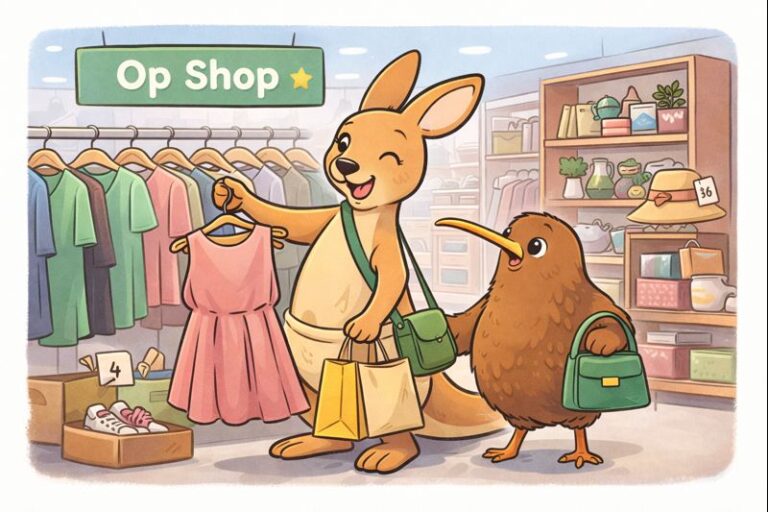
After moderating Australia and New Zealand’s op shopping communities for years (with over 168,000 members combined), I’ve noticed something that might surprise you:
Op shops are caught in an impossible position.
No matter what they do, someone will be upset.
The Impossible Balancing Act
Let me show you what I mean:
Price too low?
“You’re undervaluing donations and losing crucial fundraising for the charity!”
Price too high?
“You’re forgetting that people in need shop here!”
Accept price negotiations?
“Volunteers’ time and effort isn’t being valued!”
Don’t negotiate?
“You’re not helping people who really need it!”
Stock high-end or designer items?
“You’re pricing out regular shoppers and becoming exclusive!”
Keep prices accessible across the board?
“You’re leaving money on the table for charity!”
See the pattern?
Every single decision an op shop makes will upset someone.
Why This Happens: Competing Purposes
Here’s the fundamental issue: op shops exist to serve multiple purposes for different people, and these purposes often conflict.
Op shops are simultaneously:
💚 Raising funds for important causes (hospice care, animal welfare, community services)
💰 Providing affordable options for people on tight budgets
♻️ Keeping items out of landfill and supporting the circular economy
🎨 Offering unique and vintage finds you can’t get elsewhere
🏪 Creating volunteer opportunities and community connections
🛍️ Supporting sustainable shopping as an alternative to fast fashion
These are all valid, important purposes.
But they don’t always align.
A pricing strategy that maximizes fundraising for hospice care might make items unaffordable for someone genuinely struggling. A price point that helps someone on a tight budget might mean the charity misses out on crucial funding.
There’s no perfect answer.
The Diversity Challenge
Our op shopping communities include people with vastly different circumstances and motivations:
- People in genuine financial hardship who rely on op shops for essentials
- Environmental advocates choosing secondhand as a sustainable lifestyle
- Vintage enthusiasts and collectors hunting for specific treasures
- Budget-conscious families stretching every dollar
- Resellers supplementing their income through op shop finds
- Casual browsers who enjoy the thrill of the hunt
- Charity supporters who shop specifically to support the cause
Each group has different needs, different budgets, and different expectations about what op shops should be.
The Reality Behind the Scenes
What many shoppers don’t see is that op shops have real, significant costs—even though their stock is donated:
- Rent (often commercial rates in prime locations)
- Utilities (power, water, insurance)
- Waste disposal (can cost thousands monthly for unsellable donations)
- Wages (managers, coordinators, sometimes specialist staff)
- Volunteer support (training, coordination, supplies)
- Processing costs (sorting, cleaning, repairing items)
- Health and safety compliance
For many charities, their op shops are the primary fundraiser keeping their services running.
So What Do We Do?
Different shops will make different choices based on:
- Their specific fundraising needs and targets
- The demographics of their community
- Their volunteer capacity and turnover
- Their physical space and overhead costs
- Their organizational mission and values
Some shops will prioritize maximum fundraising. Some will prioritize accessibility. Most will try to find a middle ground.
And that’s okay.
There is no universal “right way” to run an op shop, because the purposes they serve are inherently in tension.
What We Can Do As a Community
1. Extend grace to shop workers and volunteers
They’re doing their best in an impossible situation. They can’t please everyone, and they know it. The volunteer at the counter probably didn’t set the prices, and they’re probably fielding complaints about those prices all day, (yes sometimes even when items are just 50 cents)
2. Support shops that align with your values
If a shop’s approach doesn’t work for you, that’s okay. Find one that does. Some shops lean heavily toward affordability. Others maximize fundraising. Neither is wrong.
3. Understand the context
That “overpriced” item might be covering the cost of disposing three truckloads of unsellable donations. That negotiated discount might have been offered because the item was damaged or had been sitting for months.
4. Remember everyone’s story is different
The person negotiating might be genuinely struggling financially. The person paying full price might be specifically trying to support the charity. The reseller might be a single parent supplementing their income to pay rent.
We rarely know the full story.
5. Keep perspective
If you can afford to pay the marked price at a charity shop, consider doing so. The mission matters, and every dollar counts.
If you’re genuinely stretched thin, remember that many shops have discount days, sale events, or managers with discretion to help.
About Sharing Your Op Shop Finds
Here’s something else I’ve learned from moderating these communities:
When someone shares their op shop find online—whether it’s a $5 mug or a $100 table—they’re being brave.
They don’t know how people will react. They don’t know if commenters will:
- Judge their price paid
- Question their shopping choices
- Criticize the shop
- Shame them for negotiating (or not negotiating)
- Make assumptions about their financial situation
- Attack them for their excitement
But they choose to share their joy anyway, hoping to connect with fellow op shoppers who’ll celebrate with them.
That vulnerability deserves respect, not judgment.
Before You Comment
If you see someone’s find and feel the urge to criticize, pause and ask yourself:
- Is what I’m about to say kind?
- Am I making assumptions about things I don’t know?
- Would I say this to their face in the op shop?
- Is this comment helpful, or am I just being critical?
If the answer is no, scroll on by.
Different people shop differently. Different budgets, different needs, different values. That’s what makes our community interesting.
The Bottom Line
Op shops can’t win because they’re trying to serve everyone.
The tension between “fundraising” and “affordability” is real and probably unsolvable.
The frustration from all perspectives is valid.
The competing needs are legitimate.
But here’s what we can control:
How we treat each other.
We can:
- Be kind to shop workers and volunteers doing impossible jobs
- Give grace to fellow shoppers whose circumstances we don’t know
- Support the shops whose values align with ours
- Celebrate finds without judgment
- Have respectful conversations about complex issues
- Remember that diversity of perspective is our strength, not our weakness
Our communities across Australia and New Zealand include 168,000+ people with different perspectives, needs, and shopping styles.
That diversity is our strength—as long as we approach it with empathy.
Your Turn
What do you think? How do you navigate these tensions when you’re op shopping?
Have you worked or volunteered in an op shop? What was your experience balancing these competing priorities?
Share your thoughts respectfully in the comments below. We’re all learning together.
Looking for op shops near you across Australia and New Zealand? Search our complete directory at opshops.co
Want to join our Facebook communities? We’d love to have you—just remember to bring the kindness.

Author: Jo
Life Time Op Shop Lover and Digital Creator
Leave a Reply
You must be logged in to post a comment.